
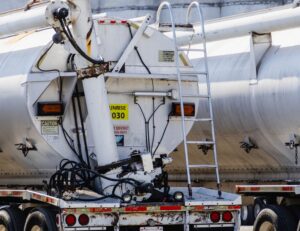

A federal investigation has uncovered serious workplace safety violations at a FleetPride Inc. facility in Corpus Christi after an employee died while inspecting a tanker trailer.
The U.S. Department of Labor’s Occupational Safety and Health Administration, commonly known as OSHA, opened its investigation following the Jan. 7 incident. According to federal officials, the employee asphyxiated during the tanker trailer inspection. The Nueces County Medical Examiner’s Office later identified the worker as Juan Antonio Garza Jr., 63.
The fatal incident drew renewed attention to the risks employees can face when entering or working in confined spaces. Following its inspection, OSHA cited FleetPride for 16 serious violations and three violations classified as “other-than-serious.” The agency also proposed $264,380 in penalties.
OSHA Investigation Finds Confined Space Hazards
Among the central findings, OSHA said FleetPride failed to implement a confined space program at the Corpus Christi operation. Such programs establish procedures for identifying hazardous spaces and controlling risks before employees enter them.
Confined spaces may have limited entry and exit points and can expose workers to dangerous atmospheric conditions. In this case, the employee’s death from asphyxiation underscores why employers must identify potential air hazards and put safeguards in place before an inspection begins.
OSHA’s citations indicate that the company exposed workers to confined-space hazards and other workplace hazards. Although the investigation followed one fatal incident, the findings covered several areas of the facility’s safety practices.
Respiratory Protection Program Also Cited
Federal inspectors also found missing elements in FleetPride’s respiratory protection program. Respiratory safeguards are especially important when employees may encounter oxygen-deficient air, toxic substances, or other atmospheric threats.
Electrical Hazards Added to FleetPride Citations
In addition to confined space and respiratory concerns, OSHA cited FleetPride for exposing employees to electrical hazards. The federal release did not provide a detailed breakdown of every cited condition, but the combined violations resulted in a substantial proposed penalty.
OSHA labels a violation “serious” when a workplace hazard creates a substantial probability of death or serious physical harm, provided the employer knew or should have known about the danger. Meanwhile, an “other-than-serious” violation is directly related to job safety and health but does not carry the same likelihood of severe harm.
The 19 total citations reflect the range of conditions inspectors documented at the site. Still, proposed citations and penalties can move through OSHA’s review and contest process before becoming final.
FleetPride Faces $264,380 Proposed Penalty.
OSHA proposed $264,380 in penalties for the cited safety violations. FleetPride operates the affected facility near Annaville along Interstate Highway 37 in Corpus Christi, South Texas.
Under the federal process, FleetPride has 15 business days after receiving the citations and proposed penalties to choose its response. The company may comply, request an informal conference with the OSHA area director, or contest the findings.
If FleetPride challenges the citations, the dispute can go before the independent Occupational Safety and Health Review Commission. That body reviews contested OSHA enforcement actions and operates separately from the agency’s inspection and citation process.
What Happens After OSHA Citations
An informal conference may allow an employer to discuss the citations, proposed penalties, correction deadlines, or other issues with OSHA. Alternatively, a formal contest sends the disputed findings into the commission’s review process.
Worker Death Highlights Workplace Safety
Garza’s death remains at the center of the federal enforcement action. The case illustrates how a routine inspection task can become deadly when a tanker trailer contains an unsafe atmosphere or lacks proper entry controls.
For workers and employers, the investigation highlights the importance of evaluating confined spaces before entry, preparing for atmospheric hazards and maintaining effective respiratory protection procedures. It also reinforces the need to address electrical dangers as part of a broader workplace safety system.
As FleetPride considers its options, OSHA’s findings establish the next steps in the regulatory process. The proposed penalties are not necessarily the final amount, but the citations formally document the hazards federal inspectors reported after the fatal incident.
Ultimately, the case places workplace safety procedures under scrutiny at the Corpus Christi facility. It also serves as a sobering reminder that hazard assessments, entry protocols and protective equipment can play a critical role in preventing another loss of life.