
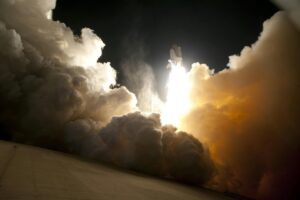

A Fiery Setback in Texas
Starship Test Ends in Fireball as SpaceX’s ambitious rocket exploded during a ground engine test on June 18 at its Starbase facility in Boca Chica, Texas. The blast, which occurred around 11 p.m. local time, destroyed the spacecraft and sparked several fires near the launch site. Although no one was injured, the incident has reignited concerns about the future of Elon Musk’s deep space ambitions.
The 400-foot rocket—the tallest ever built—is central to Musk’s vision of making life multi-planetary. But with its 10th flight test now derailed, SpaceX is re-evaluating safety protocols and development timelines.
Not a Launch – A Test Gone Wrong
Unlike prior Starship mishaps that occurred mid-flight, this explosion happened during a routine engine firing test. The vehicle stood solo on the test stand, yet to be mated with its Super Heavy booster when the fiery blast occurred. SpaceX later described the event as a “major anomaly” and “a sudden energetic event.”
According to Elon Musk, preliminary data points to a failure in a pressurized tank near the top of the spacecraft — a first for this design. The six Raptor engines slated for testing may have triggered the incident, though an internal investigation is ongoing.
A Critical Tool for Human Spaceflight
The Starship launch system consists of two massive components: the 232-foot Super Heavy booster and the 171-foot upper-stage spacecraft. Together, they form the largest and most powerful rocket ever created. Unlike most space vehicles, engineers designed Starship to be fully reusable, allowing both stages to return safely for future missions.
NASA’s Artemis III mission plans to use a Spaceship to transport astronauts from lunar orbit to the Moon’s surface. Meanwhile, Musk envisions launching an uncrewed Spaceship to Mars by 2026, followed by human expeditions in the following years. However, each setback like this one threatens to push that vision further into the future.
Test Flight Timeline in Question
Despite the explosion, SpaceX intends to continue Aggressively developing Starships. The company recently received regulatory approval to conduct up to 25 test flights per year. However, it only completed four in 2024, and the first three missions of 2025 all ended in explosions.
The May 27 test notably saw Starship spin out of control halfway through its flight and disintegrate in midair. Earlier flights in January and March also ended in fiery failure, though they managed to reach higher altitudes. SpaceX emphasized that while the outcomes were similar, each incident had a different root cause.
No Investigation, But Close Scrutiny
In a surprising move, the Federal Aviation Administration (FAA) announced it would not launch a formal investigation, as the explosion occurred during a non-licensed activity. Moreover, industry experts stress that SpaceX must demonstrate that a spaceship can fly and refuel in orbit, a vital yet unproven step for deep space.
Musk had hinted that the subsequent three test flights would happen every three to four weeks. With Flight 10 now off the table and hardware destroyed, that schedule may no longer hold.
Balancing Optimism with Reality
True to form, Musk downplayed the incident on X (formerly Twitter), joking, “Just a scratch.” While some fans welcomed his humor, critics argue that repeated failures demand more transparency and engineering accountability. The stakes couldn’t be higher given Starship’s importance to both NASA and Musk’s own Mars ambitions.
Final Thoughts: A Bumpy Road to the Stars
SpaceX leads the world in commercial spaceflight innovation, but deep space missions come with significant risk. The recent Starship test ends in fireball incident serves as a stark reminder of the complex challenges ahead—not only technical, but also political and financial.
Whether aiming to land astronauts on the Moon or send humans to Mars, Starship’s future remains uncertain. Still, if history offers any indication, SpaceX has the drive and resilience to rise—perhaps quite literally—from the ashes.